Choose the dark-night season
Reykjavík Excursions describes the aurora-tour season as late August to mid-April. Individual departures have their own operating calendars, so check your chosen dates rather than assuming every listed tour runs throughout that entire window. September through March offers a practical core period to investigate; the edges of the season need a closer look at darkness and departure time.
Longer darkness is only one part of the decision
Deep winter gives you longer nights, but it also brings weather that can disrupt a tour. A cloudy winter night can hide the aurora just as effectively as any other cloudy night. Autumn and early spring may suit a trip that also prioritizes daytime sightseeing. There is no single month that guarantees a successful evening, and the length of your stay matters because several available nights give you room to reschedule.
Use the cloud map alongside the aurora forecast
The Icelandic Met Office says viewing needs dark and partly clear skies. Its cloud map uses green for cloud and white for clearer areas; those green areas are not an aurora map. Select the relevant evening and time before reading it. The separate aurora activity scale is another input, not a promise. A guide may choose a direction based on a break in the clouds rather than the strongest-looking activity number alone.
Summer is a different kind of Iceland trip
Do not plan a June or July visit around a conventional dark-sky aurora hunt from Reykjavík. The bright summer nights are the practical obstacle. If summer is your travel window, build your trip around daylight experiences and verify seasonal availability before choosing any combination that includes an evening Northern Lights element. Avoid treating an aurora photograph on a booking page as evidence that the activity runs on your dates.
Put your first attempt early in your stay
If the aurora is a priority, leave one or more later evenings uncommitted. That allows room for a weather postponement or the product’s retry policy. It does not mean booking overlapping departures with several operators. Read the cancellation deadline and contact instructions in your confirmation, and check the provider’s departure updates before leaving for pickup.
Keep the next morning realistic
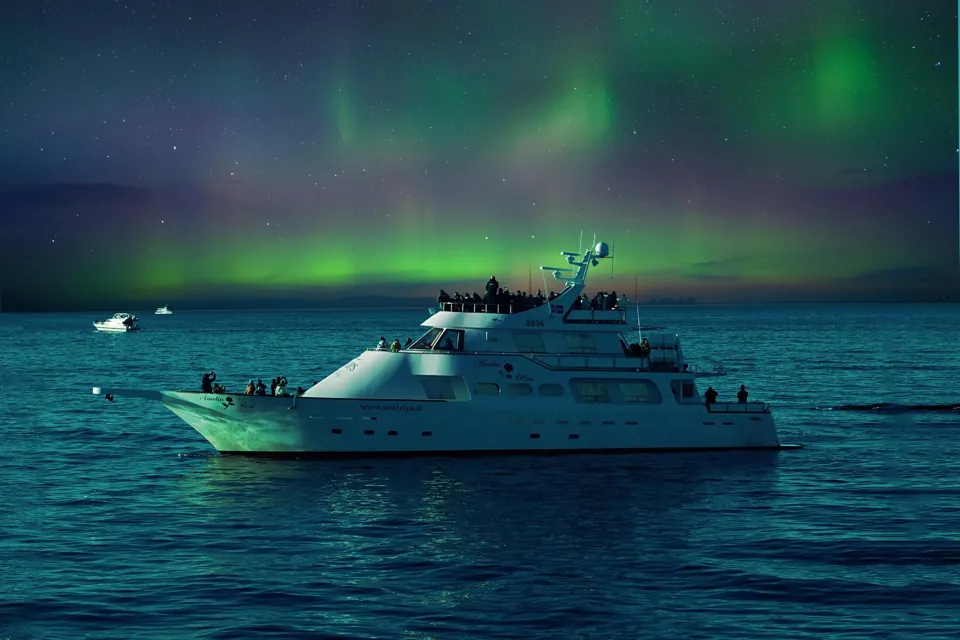
The tours in this comparison range from shorter two-hour cruises to four- or five-hour evening searches and very long combination days. Late-night returns can make an early departure the following morning tiring. For a short visit, compare the time saved by a cruise with your preference for a road-based search. For a longer visit, allow a flexible evening before committing to a full-day combination.
Sources checked November 25, 2026: Icelandic Met Office forecast guidance, Reykjavík Excursions seasonal and clothing guidance, and the exact GetYourGuide products below. Our comparisons are editorial judgments based on these listed features.